Removing Skin Cancer from the Face
with Expert Mohs Surgery
Facial skin cancer can be distressing – especially when it affects visible areas such as the nose, eyelids, or lips. You want the cancer removed safely, but you also want to preserve your appearance. That’s where expert, precision-led care makes a difference. Dr Arif Aslam, a dual fellowship-trained consultant dermatologist and Mohs micrographic surgeon, specialises in removing skin cancer from the face using techniques that deliver complete tumour clearance while keeping healthy tissue intact. This page explains how Mohs surgery works, what to expect during treatment and recovery, and why choosing a fellowship-trained surgeon ensures the best cosmetic and clinical results.

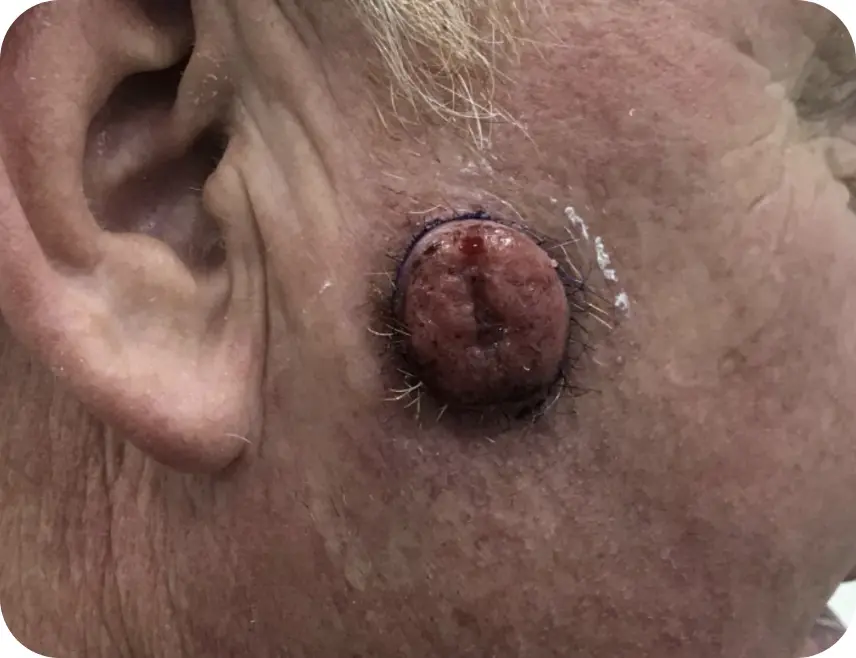
Understanding Facial Skin Cancer
Facial skin cancer develops when damaged skin cells begin to grow abnormally, most often due to cumulative sun exposure. Early detection greatly improves outcomes.
These cancers usually appear on the most sun-exposed areas – the nose, cheeks, lips, and ears – where skin is thinner and more delicate. Prompt assessment by a specialist is essential, as even small lesions can require precise surgical management to achieve clear margins and preserve natural contour.
Types of Facial Skin Cancer
The most common facial cancers are basal cell carcinoma (BCC) and squamous cell carcinoma (SCC).
BCC often appears as a pearly bump or a sore that fails to heal, while SCC can look scaly, crusted, or thickened. Facial melanoma removal may also be required when pigmented moles change in shape or colour – early removal is vital to prevent spread. Each cancer behaves differently, so treatment must be tailored to the tumour’s type, size, and depth.
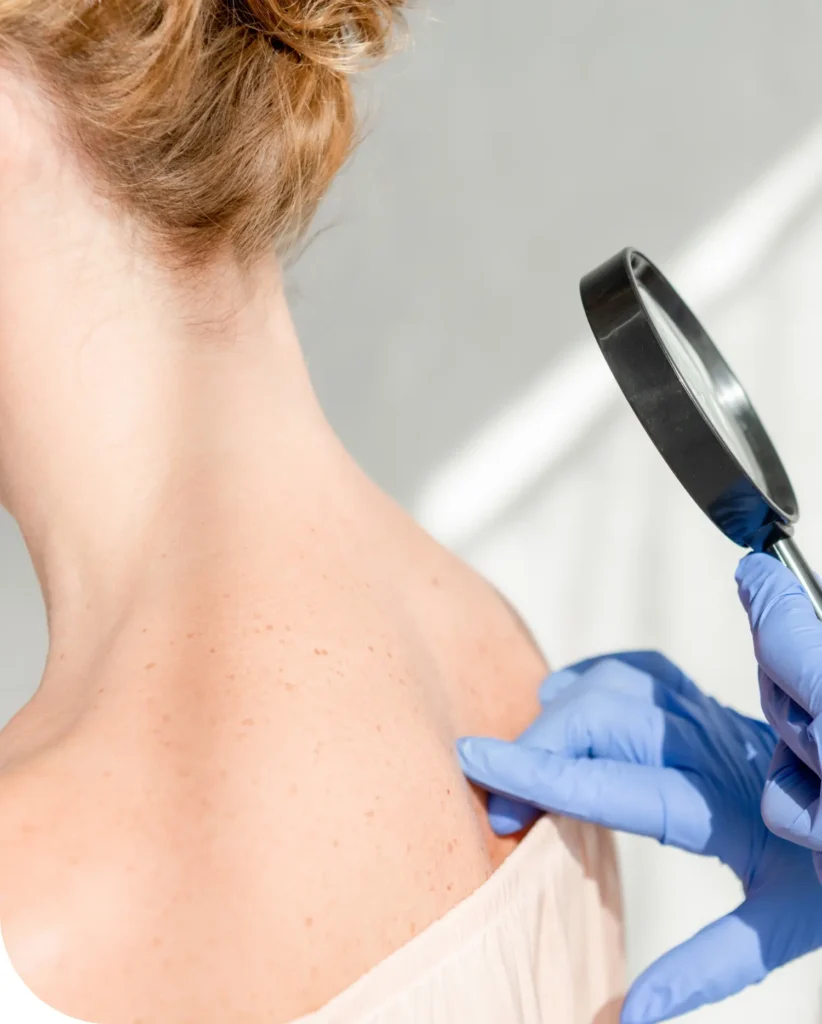
Signs and Symptoms to Watch For
Look for sores that don’t heal, shiny or crusted patches, or moles that change colour or border. Any lesion that bleeds, scabs repeatedly, or alters your facial contour should be assessed promptly. Early diagnosis means simpler surgery and a smoother recovery.

How Mohs Surgery Removes Skin Cancer from the Face
Mohs micrographic surgery is a precise, tissue-sparing method for removing skin cancer from the face areas where accuracy matters most.
During the procedure, the visible tumour and a thin layer of surrounding tissue are removed and examined immediately under a microscope. If any cancer cells remain, another thin layer is taken only from that area. This process continues until all margins are clear, allowing maximum preservation of healthy skin and reducing the need for wide excisions or secondary operations.
Why Mohs Surgery Is the Gold Standard
Mohs offers the highest cure rates, up to 99% for certain basal and squamous cell carcinomas, while conserving as much normal skin as possible. Because it maps every margin in real time, it minimises recurrence and delivers superior cosmetic outcomes, especially for the nose, lips, and eyelids.
What Happens During the Procedure
A skin cancer operation on the face using Mohs is performed under local anaesthetic. You’ll remain comfortable and awake while each thin layer is removed and analysed. Once all cancer is cleared, reconstruction begins the same day, often immediately.
The process can take several hours but ensures complete excision in one visit. Most patients describe mild swelling or tightness for a few days, managed easily with simple pain relief.
Reconstruction and Recovery After Mohs Surgery
After removal, the focus turns to restoring natural appearance and facial movement. Reconstruction options are chosen based on the tumour’s location and size.
Dr Aslam carefully plans each repair to blend with the surrounding skin and preserve expression and function. Whether closure involves delicate stitches, a local skin flap, or a small graft, every approach aims to minimise scarring and maintain facial harmony.
Healing and Scar Management
Healing takes place over several weeks. Keep the wound clean and protected; follow all aftercare instructions closely.
Once healed, silicone therapy, gentle massage, and daily sun protection help scars settle smoothly. With time, most marks fade until barely visible.
Recovery Timeline and Aftercare Tips
- Week 1: Mild swelling or bruising; dressings kept clean and dry.
- Weeks 2-6: Sutures removed; begin gentle care and light activity.
- Months 3-12: Scars continue to soften and fade.
Throughout, Dr Aslam’s team remains available for reassurance and guidance.
Why Choose a Fellowship-Trained Mohs Surgeon
A fellowship-trained Mohs surgeon combines advanced expertise in skin cancer pathology, surgical precision, and aesthetic reconstruction.
Dr Arif Aslam’s dual fellowship training ensures patients receive the highest standard of care – precise tumour removal, minimal tissue loss, and naturally restored appearance. This level of training directly translates to higher cure rates and excellent cosmetic results, particularly for complex facial sites.
How Dr Arif Aslam Improves Patient Outcomes
Dr Aslam’s patients benefit from an integrated approach that combines rapid diagnosis, surgical precision, and refined reconstruction.
His experience in both dermatologic surgery and aesthetic repair ensures that each procedure achieves medical success and confidence in appearance. Many patients describe feeling relieved by his calm, thorough explanations and the visible care taken at every step.
Treatment Access and Locations
Specialist Mohs clinics are available throughout Lancashire, including Blackburn, Blackpool, Burnley, Lancaster, and Rochdale.
These private clinics provide rapid-access appointments, often within days, to ensure treatment begins without delay. Each location offers the same high standard of surgical care, histology, and aftercare support under Dr Aslam’s direct supervision.
Booking a Consultation with Dr Arif Aslam
If you have a facial lesion or have been advised to seek specialist treatment, booking a consultation is the best next step.
During your visit, Dr Aslam will assess the area, discuss biopsy or imaging results, and outline a tailored plan for treatment and reconstruction. Appointments can be arranged promptly for those needing urgent review or reassurance.
Understanding the Cost of Private Mohs Surgery
Private Mohs surgery fees vary depending on the complexity of the tumour, reconstruction required, and clinic setting.
Dr Aslam’s team provides transparent pricing before treatment, with no hidden costs. The goal is to make high-quality, specialist care accessible and clearly explained.
Factors influencing cost include the cancer type, tumour size, and extent of reconstruction needed. Because Mohs removes only cancerous tissue, it often reduces long-term costs by preventing recurrence and additional operations.
Ready to Take the Next Step?
Facial skin cancer requires skilled, compassionate care that removes every trace of cancer while protecting your appearance.
With fellowship-trained expertise and precise Mohs micrographic techniques, Dr Arif Aslam offers patients the safest, most effective path to recovery.
If you are concerned about a lesion or seeking expert advice on removing skin cancer from the face, contact Dr Arif Aslam’s clinic to book your private consultation. Early assessment leads to faster treatment, better healing, and lasting confidence.
Frequently Asked Questions
Mohs surgery offers the highest cure rates while preserving as much healthy skin as possible. It’s the most precise approach for removing skin cancer from facial areas where accuracy and appearance matter most.
The procedure is carried out under local anaesthetic, so you remain comfortable throughout. Most patients describe mild swelling or tightness after their skin cancer operation on the face, which settles quickly with aftercare.
Initial healing takes a few weeks, though scars continue to improve over several months. With gentle wound care and sun protection, most patients find recovery straightforward and reassuring.
Scarring is kept minimal through careful reconstruction and ongoing support from your surgical team. Over time, most marks fade significantly, blending naturally with surrounding skin.
Cure rates typically reach 97-99% for basal and squamous cell carcinomas, while facial melanoma removal is approached with equal precision through tailored excision and close follow-up.
If you notice a lesion that doesn’t heal or a mole that changes in colour or shape, book an appointment promptly. Early review ensures timely diagnosis, expert treatment, and peace of mind.