What Happens If You Have
Skin Cancer?
Discovering a new mark, sore, or change in your skin can be worrying – but it’s important to know that most skin cancers are highly treatable, especially when diagnosed early. This guide explains what happens if you have skin cancer, what it means for your health, and how timely care leads to excellent recovery outcomes. You’ll learn the early warning signs, how it’s diagnosed, how skin cancer can be treated, and when to see a specialist.


Understanding Skin Cancer
What Is Skin Cancer?
Skin cancer occurs when certain skin cells begin to grow and divide in an uncontrolled way. Over time, these abnormal cells can form a lump or patch that continues to enlarge. In most cases, this process begins due to ultraviolet (UV) light from the sun or tanning beds damaging skin cell DNA.
There are two main groups: non-melanoma skin cancer (basal and squamous cell carcinoma) and melanoma, a less common but more aggressive form.
How Common Is Skin Cancer in the UK?
Skin cancer is one of the most frequently diagnosed cancers in the UK. Early diagnosis and modern skin cancer surgery options mean that most people are treated successfully. Early assessment ensures faster recovery and fewer complications.
Recognising the Early Signs
What Are the Common Symptoms?
The most common signs of skin cancer include:
- A new lump or patch that doesn’t heal
- A sore that repeatedly crusts or bleeds
- A mole that changes shape, size, or colour
- Scaly or rough skin that feels different from the surrounding areas
If you notice any of these, seek advice promptly. Early treatment keeps procedures simple and recovery fast.
What Does Skin Cancer Look Like at the Start?
- Basal cell carcinoma (BCC): often shiny or pearly with visible blood vessels
- Squamous cell carcinoma (SCC): may form a scaly or crusted patch
- Melanoma: usually appears as an irregular mole that slowly changes
Even subtle changes deserve a specialist’s opinion – reassurance and clarity come from expert evaluation, not waiting and wondering.
Recognising Concerning Moles
Dermatologists use the ABCDE rule (Asymmetry, Border, Colour, Diameter > 6 mm, Evolution). If you spot these signs, arrange a professional review rather than monitoring it yourself. Remember, what happens if you have skin cancer depends greatly on early detection – the sooner it’s found, the simpler the treatment can be.
Diagnosis and Staging
What Happens During a Consultation
During a private consultation with Dr Arif Aslam, you’ll discuss your concerns, history, and any changes you’ve noticed. A full skin examination and dermoscopy help identify suspicious areas. If needed, a small biopsy can be arranged – often on the same day – for quick results and peace of mind.How Is Skin Cancer Diagnosed and Staged?
Diagnosis combines clinical examination with biopsy and histopathology. Staging defines how deep or advanced the cancer is, guiding treatment choices. Many patients ask whether skin cancer is fatal, and the reassuring truth is that, when detected early, most forms are entirely curable with straightforward treatment.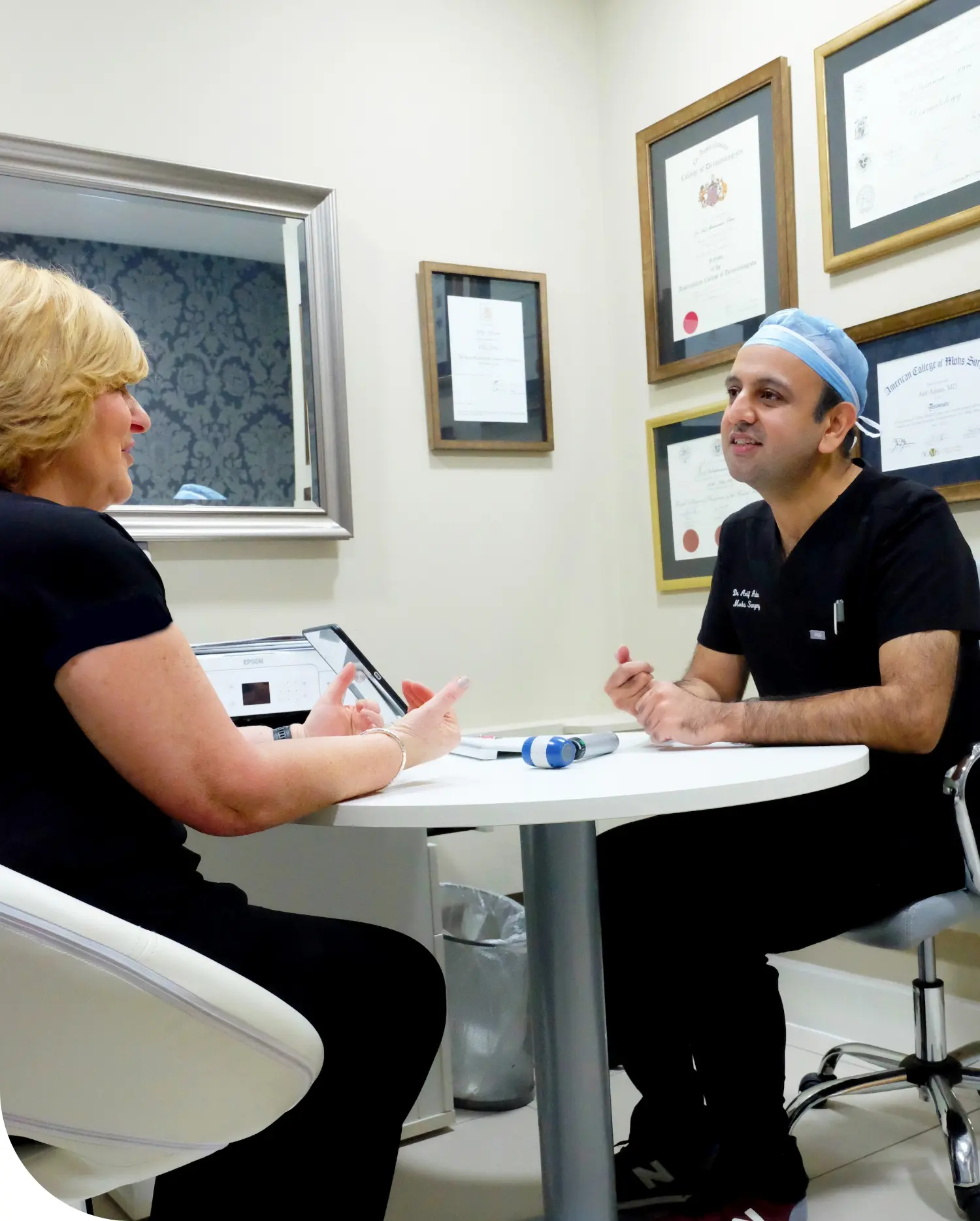

Treatment Options in the UK
How Can Skin Cancer Be Treated?
Treatment depends on the cancer type, location, and stage. Common options include:
- Surgical excision – removing the lesion with a safety margin
- Mohs micrographic surgery – precision removal ideal for facial or complex cases
- Topical or photodynamic therapy – for superficial lesions
- Radiotherapy – for patients unsuitable for surgery
Discussing how skin cancer can be treated with your dermatologist helps tailor the safest, most effective plan for you.
Why Mohs Surgery Is the Gold Standard
Mohs micrographic surgery offers the highest cure rates and preserves healthy tissue. It removes cancer layer by layer under microscopic guidance until margins are clear. This form of skin cancer surgery is particularly valuable for visible areas such as the nose or eyelids.
Dr Arif Aslam, a dual-fellowship-trained Mohs surgeon, provides expert care with minimal scarring and optimal cosmetic outcomes.
Recovery and Prognosis
What Happens If Skin Cancer Is Left Untreated?
Without treatment, lesions can deepen, cause infection, or, in rare cases, spread to lymph nodes. Patients often worry, “Is skin cancer fatal?” – and while advanced melanoma can be serious, most non-melanoma skin cancers are completely curable when treated early.
What Is the Prognosis After Treatment?
Most people make a full recovery with excellent cosmetic results. Mohs surgery and excision achieve high cure rates for early-stage cancers. Regular follow-ups help detect any recurrence early for the best long-term health.
Life After Treatment
Recovery is usually smooth, involving gentle wound care and scar protection. Follow-up visits and self-checks ensure continued skin health and confidence.

Prevention and Long-Term Skin Health
- Use broad-spectrum sunscreen daily
- Wear protective clothing and avoid midday sun
- Skip sunbeds entirely
- Perform monthly self-checks and photograph changes
- Schedule regular professional reviews if you’ve had prior treatment
Why Choose Dr Arif Aslam
Specialist Expertise and Care
Dr Arif Aslam is a consultant dermatologist and fellowship-trained Mohs surgeon offering advanced diagnosis and personalised surgery options. His warm, reassuring approach guides patients confidently through diagnosis, treatment, and recovery.
Book a Rapid-Access Consultation
If you’ve noticed a new or changing lesion, don’t wait.
Book a private consultation with Dr Arif Aslam for fast diagnosis and clear treatment planning in Lancashire and Greater Manchester. Prompt attention changes what happens if you have skin cancer – early action leads to peace of mind and the best possible outcome.
Frequently Asked Questions About Skin Cancer
If left untreated, skin cancer can grow deeper into the skin and damage surrounding tissue. In some cases, it can spread to lymph nodes or other organs. The good news is that most skin cancers are easily cured when detected and treated early – the key is not to delay specialist review.
This depends on the type and stage, options include surgical excision, Mohs micrographic surgery, topical or photodynamic therapy, and occasionally radiotherapy. Your dermatologist will recommend the best approach for complete removal and minimal scarring.
Skin cancer surgery is usually straightforward. Most procedures are done under local anaesthetic as day cases. Techniques like Mohs surgery allow precise removal while preserving healthy skin – especially useful for facial lesions. Recovery is generally quick, with only minor discomfort.
If you’ve noticed a new or changing mole, lump, or sore that doesn’t heal, it’s best to arrange an assessment promptly. Through Dr Arif Aslam’s rapid-access consultation service, patients in Lancashire and Greater Manchester can usually be seen within five days for diagnosis and reassurance.
Most patients return to normal activities within days. Mild redness or swelling is common but temporary. Protecting your skin from the sun and following your dermatologist’s wound-care advice supports smooth healing and excellent cosmetic results.
Regular sunscreen use, protective clothing, and avoiding tanning beds significantly lower risk. Monthly self-checks and annual professional reviews help spot any new changes early. Prevention and awareness are the best defences for lifelong skin health.